Psittacus Foundation

Scientific Expedition to Equatorial Guinea: Population Status of the Grey Parrot

Expedición científica a Guinea Ecuatorial: Estatus poblacional del loro gris de cola roja
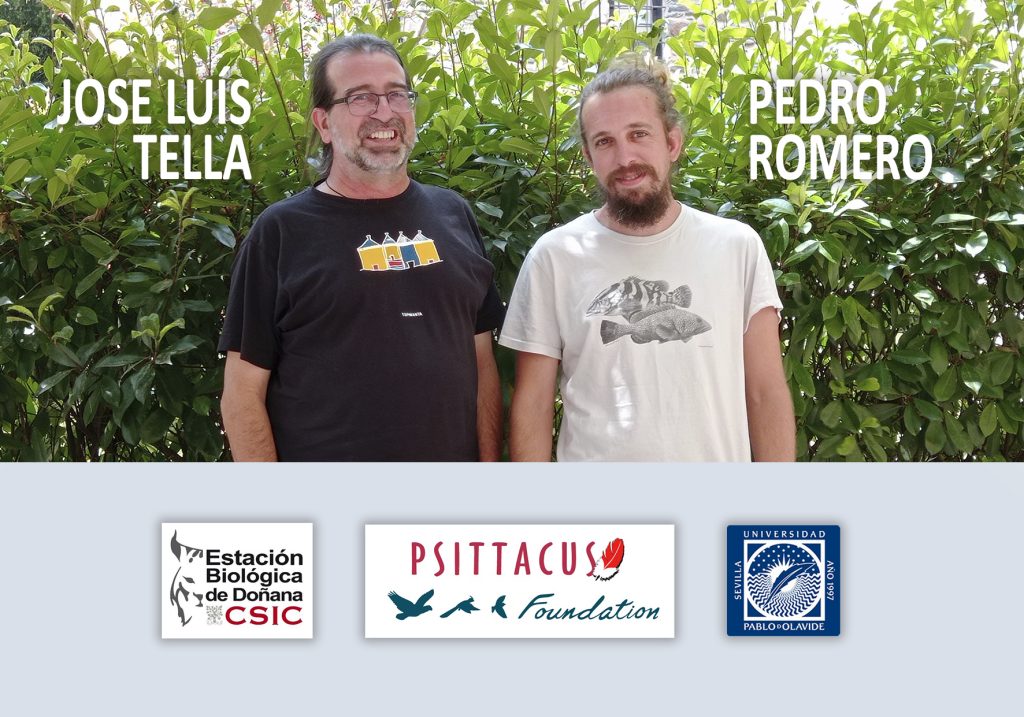
In this new expedition to learn about the population status of the African grey parrot in its habitat, researchers Pedro Romero Vidal and José Luis Tella Escobedo traveled to Equatorial Guinea.
Expedición científica a la R. D. Congo: Estrategias de conservación y futuro del loro gris de cola roja.

On this occasion, they enlisted the help of Javier Juste, a researcher from the Doñana Biological Station, who investigates the status of other species in the region and who helped them connect with local organizations working on environmental issues.

It has also helped them obtain the necessary authorizations that have allowed them to work in the country.
In this program, we’ll discuss the types of sampling used to determine the population status of this iconic species and its current population density.
Expedición científica a la R. D. Congo: Estrategias de conservación y futuro del loro gris de cola roja.
They will then conduct a comparison of the species’ population status, comparing the results obtained in Guinea with those obtained in the Democratic Republic of the Congo.
They will also analyze the differences observed between the two countries that make them two completely different realities.
These types of studies, funded by public or private entities, in this case by the Psittacus Foundation, are essential for obtaining the necessary data to assess the status of species populations and establish lines of work.
The ultimate goal is to conserve, preserve, ensure the survival of species and prevent them from silently disappearing.
survival of species and prevent them from silently disappearing
At Psittacus Live, we tell you the truth with scientific rigor and help you see reality from a new perspective.

Guests:

Dr José Luis Tella Escobedo: Research Professor at the Doñana Biological Station. He has extensive experience in conservation biology and has focused his studies on various aspects of avian ecology. In recent years, he has devoted considerable effort to understanding the extent of the illegal parrot trade in the Neotropics and its impact on ecosystems due to the loss of ecological functions of this group of birds.

Dr Pedro Romero Vida: Postdoctoral researcher at the Doñana Biological Station. His research is based on various aspects of the illegal parrot trade in the Neotropics, focusing on the impact of this human activity on one of the world’s most endangered bird groups. His research also covers other ecological aspects, such as the impact that their disappearance can have on ecosystems through the loss of ecological functions, or the effects of their introduction outside their native habitats.